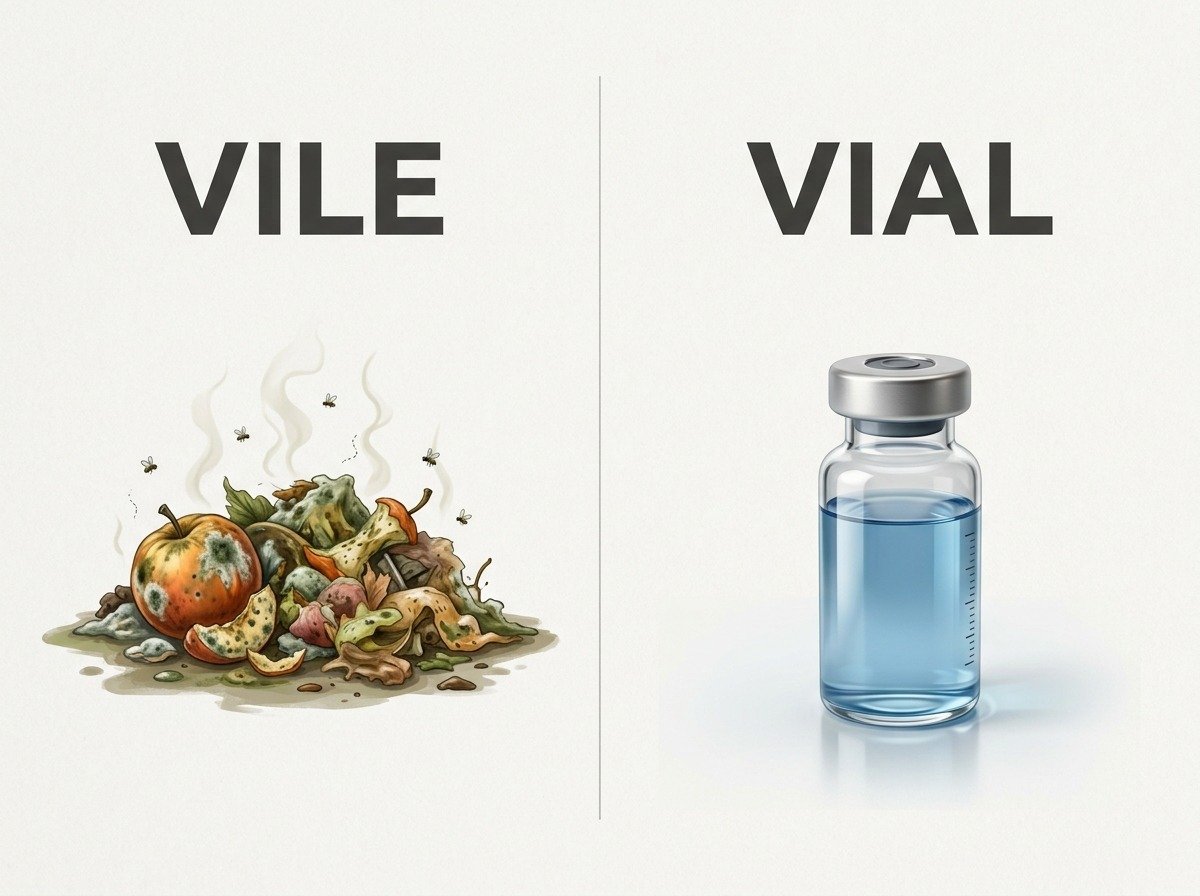
Vile means very bad, unpleasant, or evil, while a vial is a small bottle used to hold liquid, medicine, or other substances.
Have you ever written a sentence and stopped because two words sounded almost the same? Imagine a doctor telling you to bring a small vial of medicine. If you accidentally write “vile,” the sentence changes completely. A vial is a small container. Vile describes something very unpleasant, cruel, or morally bad.
The words vile or vial often confuse English learners because they sound very similar. They are also short words, so a spelling mistake is easy to make. However, their meanings are completely different. One is an adjective, while the other is a noun.
Understanding vile or vial helps you write clearly in emails, schoolwork, medical writing, news reports, and everyday messages. This guide explains vile or vial with simple definitions, pronunciation, examples, history, common mistakes, and usage tips. By the end, you will know exactly when to use vile and when to use vial.
Pronunciation
- vile: /vaɪl/ in both US and UK English.
- vial: /ˈvaɪ.əl/ in both US and UK English.
LEARN MORE ABOUThttps://personaor.com/british-or-english/
Difference Between Vile or Vial
1. Meaning
Vile describes something very bad, unpleasant, or evil.
Vial means a small bottle or container.
Examples:
- The room had a vile smell.
- The criminal committed a vile act.
- The nurse opened a vial.
- The medicine came in a small vial.
2. Part of Speech
Vile is an adjective. It describes a person, thing, action, or situation.
Vial is mainly a noun. It names a small container.
Examples:
- That was a vile comment.
- He behaved in a vile way.
- The vial contains medicine.
- She dropped the vial.
3. Describing Bad Things
Use vile when you want to show strong dislike or moral disapproval.
Examples:
- It was a vile crime.
- He made a vile remark.
You cannot use vial in these sentences.
4. Talking About Containers
Use vial for a small bottle.
Examples:
- The doctor gave me a vial of medicine.
- The scientist placed the liquid in a vial.
You cannot replace vial with vile here.
5. Emotional Meaning
Vile often has a strong negative feeling.
Examples:
- She described the attack as vile.
- The food had a vile taste.
Vial has no similar emotional meaning.
Examples:
- The vial is made of glass.
- Keep the vial closed.
6. Medical Use
Vial is common in medical settings.
Examples:
- The nurse prepared a vial of medicine.
- Store the vial in a cool place.
Vile is not a medical container word.
Examples:
- The patient received a vial.
- The drug was stored in a vial.
7. Moral Judgment
Vile can describe cruel or wicked behavior.
Examples:
- The story described a vile act.
- He was punished for his vile behavior.
Vial cannot describe behavior.
8. Spelling
The words differ by one letter pattern.
- vile → V-I-L-E
- vial → V-I-A-L
Examples:
- “Vile” describes something bad.
- “Vial” names a small bottle.
9. Sentence Structure
Vile normally comes before a noun or after linking verbs.
Examples:
- It was a vile lie.
- The smell was vile.
Vial can be used as the subject or object.
Examples:
- The vial broke.
- She carried a vial.
10. Easy Memory Trick
Think of vile as evil. Both describe something bad.
Think of vial as a small bottle.
Examples:
- A vile person may act cruelly.
- A vial may contain medicine.
Nature and Behaviour of Vile or Vial
Vile
Vile is a strong descriptive word. It usually shows that something is extremely unpleasant, bad, cruel, or offensive.
It can describe actions, behavior, smells, tastes, language, or people.
Examples:
- The room had a vile odor.
- He used vile language.
The word is usually negative.
Vial
Vial is a practical noun. It refers to a small container.
It is common in medicine, science, laboratories, and cosmetics.
Examples:
- The laboratory tested the vial.
- The doctor opened a vial.
The word itself is neutral. It does not express praise or dislike.
Why People Get Confused About Vile or Vial
The main reason is sound.
Vile is pronounced with one syllable. Vial usually has two syllables. The first sound is similar, so fast speech can make them confusing.
Their spelling also looks similar. Both begin with vi and contain the letters l and a vowel sound.
The best solution is to remember their meanings:
Vile = very bad or unpleasant.
Vial = small bottle.
Comparison Table
| Feature | Vile | Vial |
| Meaning | Very bad or unpleasant | Small bottle |
| Part of speech | Adjective | Noun |
| Main use | Describing something | Naming a container |
| Tone | Usually negative | Usually neutral |
| Common field | General English | Medicine and science |
| Example | A vile smell | A glass vial |
| Plural | Not normally plural | Vials |
| Object | Describes an object | Can be an object |
| Pronunciation | One syllable | Usually two syllables |
| Similarity | Starts with “vi” | Starts with “vi” |
The Origin of Vile or Vial
Origin of Vile
Vile comes from Old French and Latin roots linked with the idea of being cheap, worthless, or of low value. Over time, its meaning developed into something morally bad, disgusting, or very unpleasant.
Today, it is used to show strong disapproval.
Origin of Vial
Vial comes through French and Latin from words related to a small container or vessel. Its meaning became connected with small bottles used to hold liquids.
Today, it is especially common in medicine and science.
The two words developed from different historical paths, even though their modern forms look and sound similar.
British vs American English
There is no major spelling difference between vile and vial in British and American English.
Both varieties use:
- vile
- vial
The meanings are also the same.
American English examples:
- The smell was vile.
- The nurse opened a vial.
British English examples:
- The smell was vile.
- The nurse opened a vial.
The main difference may be a small change in accent or vowel quality. The correct spelling does not change.
Which One Should You Use?
Use vile when you are describing something very bad, cruel, unpleasant, or offensive.
Use vial when you mean a small bottle or container.
For US English
Use both words according to their meanings.
For UK English
Use both words in the same way.
For Global English
The same rule works almost everywhere:
Bad or unpleasant → vile
Small bottle → vial
If you are unsure, ask yourself: Am I describing something bad, or am I talking about a bottle?
Common Mistakes
Mistake 1: Using “vile” for a bottle
Incorrect:
- The nurse opened a vile of medicine.
Correct:
- The nurse opened a vial of medicine.
Mistake 2: Using “vial” to describe something bad
Incorrect:
- That was a vial crime.
Correct:
- That was a vile crime.
Mistake 3: Confusing the plural
Incorrect:
- The lab stored three viles.
Correct:
- The lab stored three vials.
Mistake 4: Thinking they have the same meaning
They do not.
Vile describes.
Vial names a container.
Mistake 5: Ignoring context
Always look at the sentence.
If the sentence mentions medicine, liquid, or a bottle, vial is probably correct.
If it describes something cruel, disgusting, or very bad, vile is probably correct.
Everyday Usage Examples
In Emails
- Please send the medicine in a sealed vial.
- The report describes the act as vile.
On Social Media
- That was a vile thing to say.
- I found an old vial in the laboratory.
In News
- Police called the attack a vile act.
- Officials said the vials were safely stored.
In Formal Writing
- The report condemned the vile behavior.
- Each sample was placed in a separate vial.
Usage Trends
Both words remain useful in modern English.
Vile is common in news, books, reviews, and everyday speech when people strongly dislike something.
Vial is common in medical, scientific, pharmaceutical, and laboratory contexts.
They do not compete for the same meaning. Their usage depends on context.
For English learners, the important point is not which word is more popular. The important point is knowing what each word means.
Metaphors and Similes
Vile in Figurative Language
Vile can be used figuratively to show strong dislike.
Examples:
- His words were vile poison to the community.
- The rumor spread like a vile stain.
These examples do not mean actual poison or stains. They compare bad words or ideas with unpleasant things.
Vial in Figurative Language
Vial is less common in everyday figurative language. However, writers may use it as a symbol of something small that holds something powerful.
Examples:
- Her memories were kept in a tiny vial of stories.
- The writer treated hope like a precious vial.
Connotative Meaning
Vile
Positive: Rarely positive. The word is strongly negative.
Negative: Very bad, cruel, disgusting, or offensive.
Example:
- The cruel act was vile.
Neutral: It can sometimes be used as a simple description of a very unpleasant smell or taste.
Example:
- There was a vile odor in the room.
Vial
Positive: It can suggest care, medicine, or something valuable.
Example:
- The vial contained a life-saving medicine.
Negative: The word itself is not normally negative.
Neutral: It usually means a small container.
Example:
- The scientist labeled the vial.
Idioms and Proverbs
There is no major common English idiom built specifically around vile or vial.
However, vile can appear in fixed expressions and literary phrases.
Examples:
- A vile act — a very bad or cruel action.
- Vile language — offensive or abusive language.
- Vile smell — a very unpleasant smell.
Example sentence:
- The newspaper condemned the attack as a vile act.
The word vial is mostly literal rather than idiomatic.
Literature and Movies
Literature
The word vile appears often in English literature because writers use it to describe evil, cruel, or unpleasant characters and actions.
For example, William Shakespeare used strong moral descriptions throughout his plays. His tragedy Macbeth, first performed around 1606, contains many descriptions of violence, evil, and corruption.
The word vial is also found in literature, especially when writers describe medicine, poison, perfume, or small containers.
Movies
The word vile can appear in dialogue and titles in films because it is a strong word for evil or disgusting behavior.
The word vial is often seen in medical, laboratory, fantasy, and science-fiction settings. It can refer to a container holding medicine, poison, chemicals, or magical liquid.
In both literature and movies, context makes the meaning clear.
Why This Difference Matters
Knowing the difference matters because one spelling can completely change a sentence.
Imagine writing:
- “The doctor gave me a vile.”
The reader may wonder what you mean.
But:
- “The doctor gave me a vial.”
is clear.
The same problem happens with vile.
Writing “a vial crime” makes the sentence incorrect because vial does not describe evil behavior.
For students, writers, professionals, and English learners, correct word choice makes communication clearer. Small spelling differences can create big meaning differences.
Usefulness in Daily Life
You may see vial when:
- Reading medicine labels.
- Visiting a laboratory.
- Reading medical instructions.
- Talking about vaccines or drugs.
- Writing scientific reports.
You may see vile when:
- Reading the news.
- Describing bad behavior.
- Discussing an unpleasant smell.
- Writing a review.
- Reading fiction.
A simple memory rule can help:
Vile = bad.
Vial = bottle.
Situational Preference
Choose vile when the sentence talks about something unpleasant, cruel, offensive, or morally bad. It works well in news, reviews, stories, and everyday conversation. Choose vial when you mean a small bottle, especially one used for medicine, chemicals, samples, or other liquids. In a medical setting, vial is the natural choice. In a sentence about cruel behavior, vile is correct. Neither word is more correct than the other. The situation decides which word you need. If you remember “vile = bad” and “vial = bottle,” you can usually choose the right word quickly.
Possible short question
Is “vile” the same as “vial”?
No. Vile means very bad, unpleasant, or cruel. Vial means a small bottle.
Is “vial” a noun?
Yes. Vial is mainly a noun. It names a small container.
Is “vile” an adjective?
Yes. Vile is an adjective. It describes something very unpleasant, bad, or evil.
How do you pronounce “vile”?
It has one syllable and rhymes with words such as “file” and “mile.”
How do you pronounce “vial”?
It is usually pronounced with two syllables. The first part sounds like “vie,” followed by a short unstressed vowel sound.
What is the plural of vial?
The plural is vials.
Example:
- The nurse prepared three vials.
How can I remember the difference?
Use this simple rule:
Vile = bad.
Vial = small bottle.
Conclusion
The difference between vile and vial is simple once you connect each word with its meaning. Vile is an adjective. It describes something very bad, cruel, disgusting, or unpleasant. Vial is a noun. It means a small bottle or container, often used for medicine, chemicals, or samples These words can confuse English learners because their spelling is similar and their pronunciation is close. However, they are not interchangeable. A vile action is a terrible action, while a vial may hold medicine. Remember the easiest rule: vile = bad, vial = bottle. This short memory trick can help you avoid spelling and word-choice mistakes in emails, school assignments, medical writing, social media posts, and everyday conversation. Whether you use American English, British English, or global English, the meanings and spellings remain the same. Learn the difference once, and you will have little trouble choosing the right word.

I’m Daim Abbas, an English language enthusiast, content writer, and SEO writer. I create clear and practical content about word meanings, synonyms, vocabulary, and commonly confused English words. I’m passionate about making English easy to understand while creating helpful, reader-friendly, and SEO-optimized content.