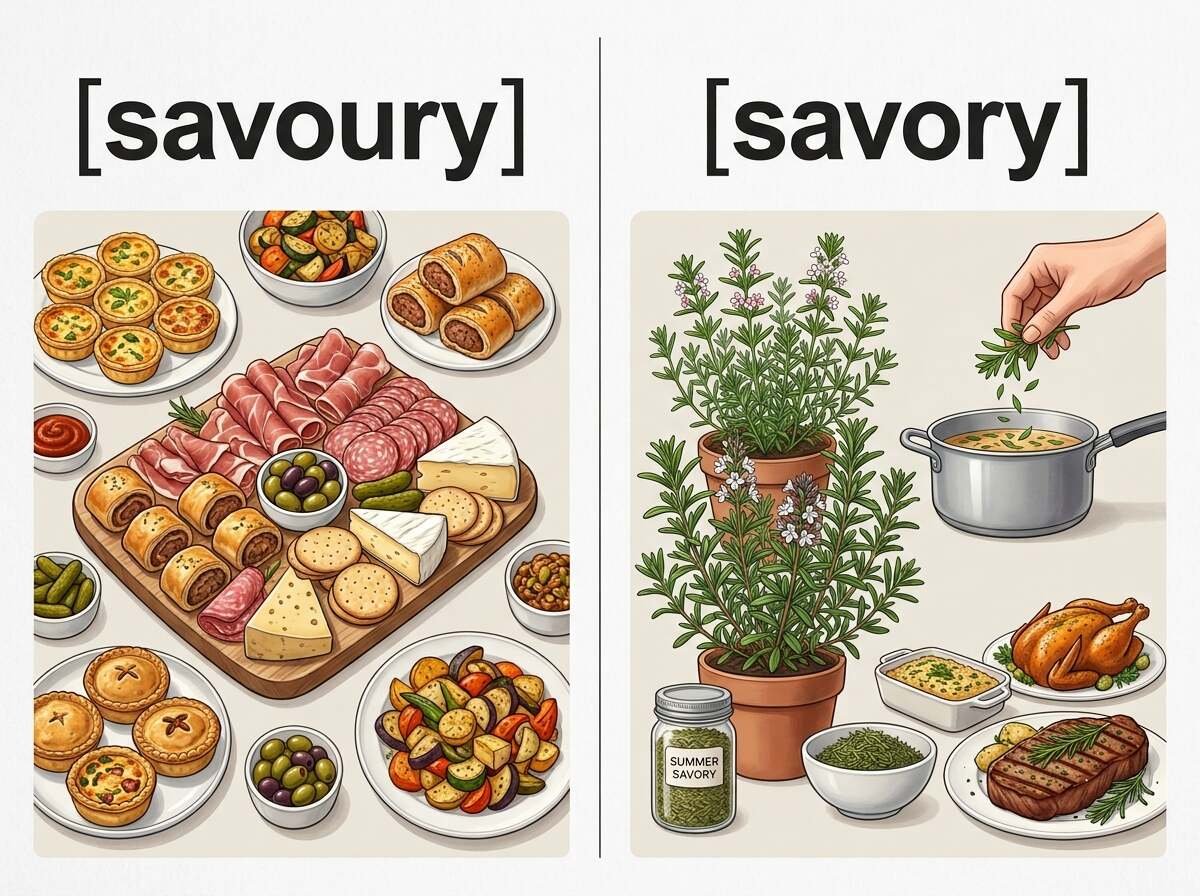
Savoury is the British spelling, while savory is the American spelling. Both are correct and have the same meaning.
Have you ever typed a food description and stopped to wonder whether you should write “savoury” or “savory”? You are not alone. This is a common spelling question, especially for people who read both British and American English.
Imagine you are writing a restaurant review. You want to describe a warm bowl of soup with herbs, vegetables, and spices. You type, “The soup had a rich and ___ flavor.” Then you pause. Should it be savoury or savory?
The answer depends on the type of English you are using. British English, Australian English, and several other varieties generally use savoury. American English usually uses savory.
The two spellings do not have different meanings. Both describe food that has a rich, salty, spicy, or meaty taste rather than a sweet taste. The word can also describe something pleasant, tasty, or appealing.
In this guide, you will learn the difference between savoury and savory, when to use each spelling, their meanings, examples, and an easy way to remember the difference.
What Does Savoury or Savory Mean?
Savoury and savory are adjectives used mainly to describe food with a taste that is not sweet.
For example:
- The soup has a savoury taste.
- The soup has a savory taste.
- She prepared a savoury breakfast.
- She prepared a savory breakfast.
Both sentences have the same meaning.
The word can describe foods such as meat, vegetables, eggs, cheese, soup, sauces, and snacks. It is often used when talking about foods with salty, spicy, rich, or umami flavors.
Simple definition
Savoury/Savory: Having a pleasant, rich, salty, spicy, or flavorful taste rather than a sweet taste.
The word can also be used in a broader sense to describe something that is appealing or pleasant.
What Is the Difference Between Savoury and Savory?
The main difference is spelling, not meaning.
| Word | English Variety | Meaning |
| Savoury | British English | Flavorful and not sweet |
| Savory | American English | Flavorful and not sweet |
The spelling with -our is generally associated with British English.
The spelling with -or is generally associated with American English.
This is similar to other British and American spelling differences:
- colour → color
- flavour → flavor
- honour → honor
- favourite → favorite
So, savoury and savory follow a familiar British-American spelling pattern.
When Should You Use Savoury?
Use savoury when writing in British English or another variety that follows British spelling conventions.
For example:
- I prefer savoury snacks to sweet snacks.
- We had a savoury pie for lunch.
- The restaurant serves several savoury dishes.
- This sauce gives the dish a deep savoury flavor.
- She made a delicious savoury breakfast.
If your audience is mainly in the United Kingdom, savoury is usually the better choice.
The spelling is also common in other English-speaking regions that traditionally follow British spelling.
When Should You Use Savory?
Use savory when writing in American English.
For example:
- I prefer savory snacks to sweet snacks.
- We had a savory pie for lunch.
- The restaurant serves several savory dishes.
- This sauce gives the dish a deep savory flavor.
- She made a delicious savory breakfast.
If you are writing for an American audience, savory is generally the standard spelling.
Is Savoury or Savory Correct?
Both are correct.
There is no spelling error in either word when it is used in the appropriate English variety.
If you are using British English, choose savoury.
If you are using American English, choose savory.
The important thing is to remain consistent throughout your writing. For example, if your article uses British spellings such as colour, flavour, and favourite, then savoury will fit naturally.
If your article uses American spellings such as color, flavor, and favorite, then savory is the better choice.
Savoury vs. Savory Examples
Here are some examples showing how both spellings work.
Example 1
British English:
I ordered a savoury pancake with cheese and vegetables.
American English:
I ordered a savory pancake with cheese and vegetables.
Example 2
British English:
The soup has a rich and savoury flavor.
American English:
The soup has a rich and savory flavor.
Example 3
British English:
She prefers savoury foods for breakfast.
American English:
She prefers savory foods for breakfast.
Example 4
British English:
The dish has a deep savoury taste.
American English:
The dish has a deep savory taste.
The meaning remains the same in every example.
Savoury or Savory for Food
Both words are commonly used to describe foods that are not sweet.
Examples of savoury/savory foods include:
- Eggs
- Cheese
- Pizza
- Soup
- Pasta
- Meat
- Vegetables
- Sandwiches
- Crackers
- Savory pastries
- Spiced rice
- Sauces
For instance, you might say:
The restaurant offers a wide range of savory dishes.
Or, in British English:
The restaurant offers a wide range of savoury dishes.
Both sentences are correct.
Savoury or Savory Snacks
The word is also common when talking about snacks.
A savoury snack or savory snack is usually salty, spicy, cheesy, or otherwise flavorful instead of sweet.
Examples include:
- Potato chips
- Pretzels
- Cheese crackers
- Spiced nuts
- Popcorn
- Vegetable pastries
- Nachos
You could write:
British English:
I like savoury snacks more than chocolate.
American English:
I like savory snacks more than chocolate.
Savoury or Savory Breakfast
Breakfast foods can also be described with this word.
For example:
- Eggs and toast
- Cheese omelets
- Breakfast sandwiches
- Sausages
- Hash browns
- Vegetable pancakes
Example:
British English:
She enjoys a savoury breakfast with eggs and toast.
American English:
She enjoys a savory breakfast with eggs and toast.
Why Does One Version Have “U”?
The difference comes from the spelling traditions of British and American English.
British English often keeps the -our spelling in words such as:
- colour
- flavour
- honour
- neighbour
- favourite
- savoury
American English often removes the u:
- color
- flavor
- honor
- neighbor
- favorite
- savory
This does not mean that one spelling is more correct than the other. They simply belong to different spelling systems.
Is Savoury British or American?
Savoury is primarily the British English spelling.
It is commonly used in British English and is also found in other English varieties influenced by British spelling.
Savory, on the other hand, is the standard American English spelling.
A simple rule is:
British English → savoury
American English → savory
Is Savory British or American?
Savory is primarily the American English spelling.
American English commonly removes the u from words that use -our in British English.
For example:
- British: flavour
- American: flavor
Likewise:
- British: savoury
- American: savory
Savoury or Savory: Pronunciation
The two spellings are generally pronounced the same.
The spelling changes, but the pronunciation does not normally change just because of the missing u.
The word has three syllables, with the main stress on the first syllable.
When speaking, focus on making the first syllable clear and natural.
Savoury or Savory: Which One Should You Use?
The best choice depends on your audience.
Use “savoury” if:
- You are writing in British English.
- Your audience is mainly British.
- Your website follows British spelling.
- You use spellings such as colour and flavour.
- Your educational material follows British English conventions.
Use “savory” if:
- You are writing in American English.
- Your audience is mainly American.
- Your website follows American spelling.
- You use spellings such as color and flavor.
- Your educational material follows American English conventions.
Common Mistakes
One common mistake is thinking that savoury and savory have different meanings.
They do not.
Another mistake is mixing spelling systems without a reason. For example, an article might use colour, favourite, and flavor. While readers will usually understand it, consistent spelling looks more polished.
Choose one English variety and follow it throughout your content.
Incorrect assumption
“Savory is wrong because British English uses savoury.”
This is false.
Savory is the standard American spelling.
Another incorrect assumption
“Savoury is wrong because American English uses savory.”
This is also false.
Savoury is the standard British spelling.
Easy Trick to Remember the Difference
Here is a simple memory trick:
Savoury = British
Savory = American
Think of the U in savoury as part of the British spelling pattern found in colour and flavour.
You can remember it like this:
British English keeps the U.
American English usually drops the U.
This trick also works for several related words.
Savoury vs. Savory in a Sentence
Here are a few more examples:
- The chef prepared a savoury sauce. — British English
- The chef prepared a savory sauce. — American English
- I ordered a savoury pastry. — British English
- I ordered a savory pastry. — American English
- The meal had a strong savoury flavor. — British English
- The meal had a strong savory flavor. — American English
- She likes savoury foods more than desserts. — British English
- She likes savory foods more than desserts. — American English
Notice that the meaning does not change.
Related British and American Spelling Differences
Understanding this pair becomes easier when you know other British-American spelling differences.
| British English | American English |
| savoury | savory |
| flavour | flavor |
| colour | color |
| favourite | favorite |
| honour | honor |
| neighbour | neighbor |
These examples show a common spelling pattern: British English often retains the u, while American English often removes it in these words.
POSSIBLE SHORT QUESTION
Is “savoury” or “savory” correct?
Both are correct. Savoury is the British English spelling, while savory is the American English spelling.
Does savoury mean the same as savory?
Yes. They have the same meaning. Both generally describe food that is flavorful, salty, spicy, rich, or not sweet.
Is savoury British English?
Yes. Savoury is the standard British English spelling.
Is savory American English?
Yes. Savory is the standard American English spelling.
Can I use savoury in American English?
You can, but savory is the standard spelling in American English. If you are writing for an American audience, savory is usually the better choice.
Can I use savory in British English?
Readers will understand it, but savoury is the standard British spelling. For formal British English writing, use savoury.
Are savoury and savory pronounced differently?
Generally, no. The two spellings normally have the same pronunciation.
What is the opposite of savoury or savory?
In the context of food, sweet is often used as the contrast. For example, a meal may have sweet dishes and savory dishes.
Final Verdict
The choice between savoury and savory is simple: savoury is British English, and savory is American English.
Neither spelling is wrong. The difference is mainly a matter of regional spelling conventions.
If your readers use British English, choose savoury. If your readers use American English, choose savory. Most importantly, stay consistent with the English variety used throughout your writing.
So, whether you enjoy a savoury pie or a savory pie, you are using the same word and describing the same kind of delicious, non-sweet flavor.
Conclusion
Savoury and savory are two spellings of the same word. The main difference is regional spelling. Savoury is used mainly in British English, while savory is the standard American form.Both words describe food that is not sweet. They can refer to salty, spicy, or strongly flavored dishes. They can also have a figurative meaning. For example, a “less savory” situation may be unpleasant or questionable.The word has a long history. Its roots are linked to old words for taste, flavor, and pleasantness. Over time, British and American English developed different spelling habits. The British form kept -our, while the American form generally uses -or.So, remember one simple rule: UK = savoury; US = savory.Neither spelling is wrong. Choose the form that matches your audience, and keep your spelling consistent throughout your writing.

I’m Daim Abbas, an English language enthusiast, content writer, and SEO writer. I create clear and practical content about word meanings, synonyms, vocabulary, and commonly confused English words. I’m passionate about making English easy to understand while creating helpful, reader-friendly, and SEO-optimized content.