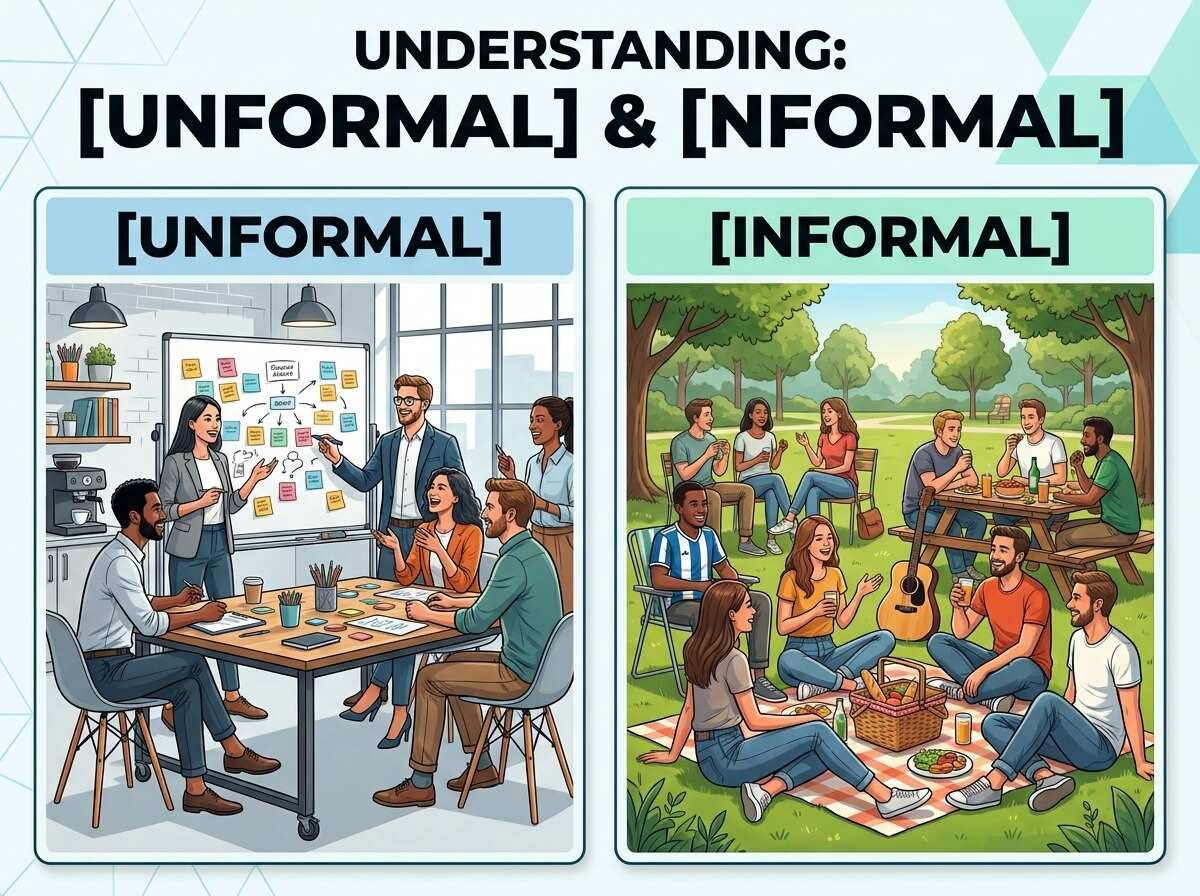
Informal is the correct and common word. Unformal is very rare and is usually not the word you should use.
Imagine you are writing an email to your teacher. You want to say that your message has a relaxed tone. You type, “My email is unformal.” Then you stop and wonder, “Is unformal a real English word, or should I say informal?” This is a common problem for English learners.
The word informal means relaxed, casual, or not official. We use it for speech, clothes, meetings, writing, and social situations. For example, you can have an informal conversation with a friend.
Unformal can be found in English, but it is uncommon. It is not the normal choice in modern everyday English. This is why people often search for unformal or informal when they are unsure which word sounds correct.
If you are choosing between unformal or informal, use informal in almost all normal situations. It is clear, natural, and widely accepted.
Pronunciation
Informal — US
Informal — UK
Unformal — US
For UK English, unformal would normally follow the same basic stress pattern: the second syllable is stressed.
Now, let’s look at the difference in meaning, usage, history, and everyday English.
Difference Between Unformal or Informal
1. Commonness
Informal is very common. Unformal is rare.
Examples:
- We had an informal meeting.
- She wore informal clothes.
2. Standard English
Informal is the standard word used by modern English speakers and writers.
Examples:
- Please use an informal tone.
- The event was informal.
3. Meaning
Informal means relaxed or not official.
Examples:
- We had an informal chat.
- He gave an informal speech.
Unformal may suggest “not formal,” but this meaning is normally expressed with informal.
Examples:
- Use an informal style.
- Write an informal message.
4. Use in Writing
Informal is common in articles, emails, school work, and general writing.
Examples:
- This letter has an informal tone.
- The writer uses informal language.
5. Use in Speech
People often use informal when describing casual speech.
Examples:
- His speaking style is informal.
- We had an informal conversation.
6. Use in Business
Informal is useful when a business activity is relaxed rather than official.
Examples:
- We had an informal meeting.
- The manager invited us to an informal lunch.
7. Use in Education
Teachers and students commonly use informal to describe relaxed communication.
Examples:
- This is an informal discussion.
- The teacher used an informal example.
8. Natural Sound
Informal sounds natural to modern English speakers.
Examples:
- That sounds informal.
- Her email is too informal.
Unformal can sound unusual or incorrect.
Examples:
- “Your message is informal” sounds natural.
- “Your message is unformal” sounds unusual.
9. Dictionary Use
Informal is a well-established English adjective.
Examples:
- informal language
- informal meeting
Unformal is much less common.
Examples:
- It is not the normal choice.
- Use “informal” instead.
10. Best Choice
When you mean “not formal,” choose informal.
Examples:
- We want an informal atmosphere.
- Please keep the email informal.
Nature and Behaviour of Unformal or Informal
Informal
Informal describes something relaxed, casual, friendly, or unofficial. It does not always mean careless. A professional person can still use an informal style.
For example, a manager may send a short and friendly email to a coworker. The email can be professional but informal.
Unformal
Unformal is a rare form. It can logically look like the opposite of “formal,” but English does not normally use it for everyday communication.
In most cases, informal is the better and safer choice.
Why People Get Confused About Unformal or Informal
The confusion comes from the prefix un-.
English uses un- with many adjectives:
- happy → unhappy
- fair → unfair
- clear → unclear
- formal → unformal
So, unformal may look logical.
However, English does not always create opposites by adding un-. Some words have a different established form.
For formal, the normal opposite is informal.
Comparison Table
| Feature | Informal | Unformal |
| Meaning | Not formal; casual | Literally suggests not formal |
| Commonness | Very common | Rare |
| Modern usage | Standard | Uncommon |
| Natural choice | Yes | Usually no |
| Business use | Common | Rare |
| Academic use | Common | Rare |
| Everyday speech | Common | Unusual |
| Writing | Widely used | Not normally used |
| Best choice | Yes | Usually avoid |
| Example | An informal meeting | An unformal meeting |
The Origin of Unformal or Informal
The word formal comes from Latin formalis, meaning related to form or shape. English later developed formal to describe something that follows accepted rules, customs, or forms.
The prefix in- can mean “not.” In informal, it creates the opposite of formal.
The word informal became established in English as a way to describe things that were not formal or official.
Although unformal can be understood from English word-building patterns, it never became the normal modern form. Language is shaped by common use, history, and convention. A word can look logical but still sound unnatural.
British vs American English
There is no major British-American spelling difference between informal and unformal.
Both British and American English normally use:
- informal language
- informal clothes
- informal meeting
- informal conversation
Examples:
American English:
- We had an informal meeting.
British English:
- We had an informal meeting.
The spelling stays the same.
The main difference is not between British and American English. It is between the common word and the rare word.
Which One Should You Use?
US English, use informal.
UK English, use informal.
Global English, use informal.
This is especially important when writing for work, school, websites, or international readers.
You can use unformal only when discussing the word itself, historical language, or a very specific source that uses it.
For normal writing, informal is the clear choice.
Common Mistakes
Mistake 1: Using Unformal in Everyday Writing
Incorrect or unusual:
“My email is unformal.”
Better:
“My email is informal.”
Mistake 2: Thinking Unformal Is the Normal Opposite
Unformal may look logical, but informal is the established word.
Mistake 3: Using Informal When You Mean Unprofessional
Informal does not always mean bad or unprofessional.
Example:
- “The meeting was informal.”
This means the meeting was relaxed.
Mistake 4: Thinking Informal Means Careless
Informal language can still be clear and polite.
Example:
- “Hi John, Thanks for your message!”
This can be informal but professional.
Mistake 5: Using Informal in a Very Formal Situation
Some situations need formal language.
Better:
- Job application → formal
- Message to a close friend → informal
Everyday Usage Examples
In Emails
Informal:
- “Hi Sam, Can we talk tomorrow?”
Formal:
- “Dear Mr. Smith, I would like to discuss the matter with you.”
On Social Media
- “We had an informal chat today.”
- “The event had a fun and informal feel.”
News
- “The leaders held an informal meeting.”
Formal Writing
- “The study examines informal communication among workers.”
Daily Conversation
- “We had an informal dinner.”
- “She prefers an informal style.”
Usage Trends
Informal is widely used around the world. English learners see it in dictionaries, textbooks, emails, websites, and everyday conversations.
Unformal is much less common.
Modern English tends to prefer words that are familiar and widely understood. Because informal is already the established opposite of formal, speakers normally choose it.
This makes informal the safest choice for international English.
Metaphors and Similes
The word informal can also help create figurative descriptions.
Metaphor
- “The meeting was a friendly chat.”
This compares the meeting to a casual conversation.
Simile
- “The event felt like an informal family gathering.”
This shows a relaxed and friendly atmosphere.
More Examples
- “Her office is as relaxed as a living room.”
- “The conversation was a breath of fresh air.”
These examples show the relaxed feeling often connected with informal settings.
Connotative Meaning
Positive Meaning
Informal can suggest warmth, friendliness, and comfort.
Example:
- “The informal meeting helped everyone feel relaxed.”
Negative Meaning
In some situations, informal can suggest a lack of seriousness.
Example:
- “His informal approach seemed careless during the serious meeting.”
Neutral Meaning
Often, informal is simply a factual description.
Example:
- “The company held an informal discussion.”
The word itself is not automatically positive or negative.
Idioms and Proverbs
There is no major English idiom based specifically on unformal.
However, several common expressions describe informal situations.
Break the Ice
This means to make people feel more comfortable.
Example:
“The manager told a joke to break the ice.”
Put Your Feet Up
This means to relax.
Example:
“After work, I like to put my feet up.”
Let Your Hair Down
This means to relax and enjoy yourself.
Example:
“The team went out to let their hair down.”
These expressions often appear in informal communication.
Literature and Movies
Informal language appears in many types of literature, especially realist fiction, comedy, young adult fiction, and contemporary novels.
Writers often use informal dialogue to make characters sound natural.
For example, The Catcher in the Rye by J. D. Salinger, published in 1951 in the United States, is known for its conversational style and distinctive teenage voice.
Movies also use informal language often. American films such as The Breakfast Club (1985, United States) show casual conversations between young characters.
British films also use informal speech to make dialogue sound natural and realistic.
Why This Difference Matters
Knowing the difference between informal and unformal helps English learners avoid unnatural wording.
It matters in:
- school assignments
- emails
- job applications
- websites
- business communication
- conversations
- social media
Using the right word also makes your English easier for others to understand.
A small word choice can change how natural your writing sounds. Informal is the word most readers expect when you mean “not formal.”
Usefulness in Daily Life
You may need informal when describing:
- a casual meeting
- friendly language
- relaxed clothes
- a simple conversation
- a social event
- an email to a friend
- a relaxed workplace
For example:
“The dress code is informal.”
Or:
“Please use an informal tone.”
These are simple and natural sentences.
Situational Preference
In most situations, informal is the better word. Use it in everyday conversations, emails, social media posts, school discussions, and workplace communication when you mean something casual or unofficial. In formal writing, you may need the word formal instead. Unformal should usually be avoided because it is rare and can sound unnatural. For US, UK, and international English, informal is the safest choice. If you are writing for a professional audience, choose your words based on the level of formality you need.
POSSIBLE SHORT QUESTION
Is unformal a correct English word?
Unformal exists in some English usage, but it is rare. Informal is the normal and widely accepted word.
Is informal the opposite of formal?
Yes. Informal is the standard opposite of formal.
Should I say unformal or informal?
Use informal in almost all normal situations.
Is unformal used in British English?
It can appear rarely, but it is not the usual British English choice. British speakers normally use informal.
Is unformal used in American English?
It is uncommon. American English normally uses informal.
Does informal mean unprofessional?
No. Informal means relaxed or casual. Something can be informal and still be professional.
What is an example of informal language?
“Hi, how are you?” is an example of informal language. It is friendly and casual.
Conclusion
When choosing between unformal or informal, the best answer is usually informal. It is the common, natural, and standard word for something that is not formal. Informal can describe language, clothes, meetings, conversations, events, and many other situations. It often means relaxed, casual, friendly, or unofficial. It does not automatically mean careless or unprofessional. Unformal may seem logical because English often uses the prefix un- to make opposites. However, English does not always follow one simple rule. Over time, informal became the normal opposite of formal, while unformal remained rare .This difference is useful for English learners because choosing the familiar word makes writing clearer and more natural. Whether you use American English, British English, or global English, informal is the safest choice. So, if you are ever unsure about unformal or informal, remember this simple rule: use informal when you mean “not formal.”

I’m Daim Abbas, an English language enthusiast, content writer, and SEO writer. I create clear and practical content about word meanings, synonyms, vocabulary, and commonly confused English words. I’m passionate about making English easy to understand while creating helpful, reader-friendly, and SEO-optimized content.












1 thought on “Unformal or Informal: Which Word Is Correct in English?”