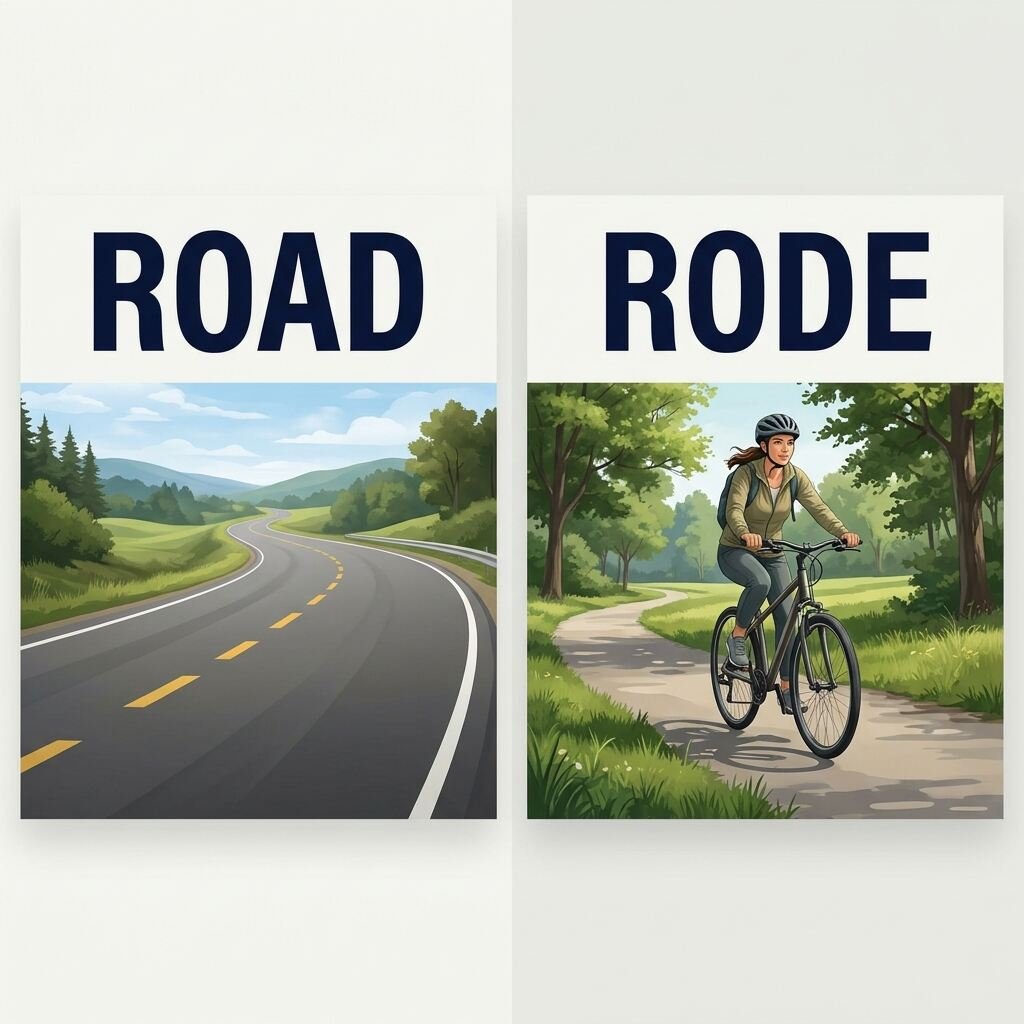
Road means a path where people and cars travel. Rode is the past form of the verb ride.Imagine you are telling a friend about your school trip. You want to say that you rode a bus yesterday. But you write, “I road a bus.” This is a spelling mistake.Road and rode sound the same. But they have different meanings.
Many English learners mix them up because they sound alike. People often search for road or rode to learn which word is correct. The word road is used for streets, paths, and highways. The word rode is used for past actions. Both words are common in daily English.
Learning the difference between road and rode is easy. You only need to remember their meanings. This guide will explain their meanings, uses, grammar, and examples. It will also show common mistakes and simple ways to use these words.
Pronunciation of Road and Rode
Both words have the same sound in American and British English.
| Word | US Pronunciation | UK Pronunciation |
|---|---|---|
| Road | /roʊd/ | /rəʊd/ |
| Rode | /roʊd/ | /rəʊd/ |
Both words rhyme with “code.”
Learn more abouthttps://personaor.com/shovelled-or-shoveled/
Difference Between Road and Rode
Here are 10 simple differences between road and rode.
1. Meaning
Road: A path used by people and vehicles.
Examples:
- This road is very long.
- We walked on the road.
Rode: The past form of ride.
Examples:
- He rode a horse.
- She rode her bike.
2. Part of Speech
Road: It is a noun. It names a place.
Examples:
- The road is wide.
- This road is clean.
Rode: It is a verb. It shows an action.
Examples:
- Ali rode a bike.
- She rode a horse.
3. Grammar
Road: We use road to talk about a place.
Examples:
- The road is busy.
- We crossed the road.
Rode: We use rode to talk about a past action.
Examples:
- I rode a bus yesterday.
- He rode a bicycle.
4. Usage
Road: Use road when talking about streets and paths.
Examples:
- This road leads to Lahore.
- The road is narrow.
Rode: Use rode when talking about past travel.
Examples:
- She rode a camel.
- He rode his bike to school.
5. Time
Road: Road does not show time. It names a place.
Examples:
- The road is new.
- This road is safe.
Rode: Rode shows an action in the past.
Examples:
- I rode a horse yesterday.
- They rode a bus last week.
6. Sentence Structure
Road: It often comes after words like “the” and “a.”
Examples:
- The road is long.
- A road connects two towns.
Rode: It often comes after the subject.
Examples:
- He rode a horse.
- They rode their bikes.
7. Word Forms
Road: Its plural form is roads.
Examples:
- These roads are clean.
- The city has many roads.
Rode: It comes from the verb ride.
Examples:
- I ride a bike.
- I rode a bike yesterday.
8. Related Words
Road: Some related words are roadway, roadside, and roadwork.
Examples:
- Roadwork starts today.
- We enjoyed our road trip.
Rode: Some related words are ride, riding, and ridden.
Examples:
- I like riding horses.
- She has ridden a camel.
9. Common Use
Road: It is used when talking about travel routes.
Examples:
- The road is closed.
- Our house is near the road.
Rode: It is used when talking about past actions.
Examples:
- He rode to school.
- She rode a horse.
10. Main Purpose
Road: It tells us about a place.
Examples:
- The road is wide.
- This road leads to the park.
Rode: It tells us about an action.
Examples:
- I rode a bike.
- They rode horses.
Nature and Behaviour of Road and Rode
Nature and Behaviour of Road
Road is a noun. It means a path or street.
People use roads to travel from one place to another. Cars, buses, and bikes also use roads.
Examples:
- The road is busy.
- We live near a main road.
Road is also used in other words.
Examples:
- Road trip
- Roadside
- Roadwork
Nature and Behaviour of Rode
Rode is the past form of ride.
We use it when someone travelled on a bike, horse, or other transport in the past.
Examples:
- He rode a bike.
- She rode a horse.
Remember these three forms:
- Present: Ride
- Past: Rode
- Past participle: Ridden
Example:
- I ride a bike.
- I rode a bike yesterday.
- I have ridden a bike before.
Why People Get Confused About Road and Rode
People confuse road and rode because both words sound the same.
But their meanings are different.
- Road means a path.
- Rode means travelled on something in the past.
These words are called homophones. Homophones sound the same but have different meanings and spellings.
For example:
- The road is long.
- He rode a horse.
The best way to avoid mistakes is to learn the meaning of each word.
Comparison Table
| Feature | Road | Rode |
|---|---|---|
| Meaning | A path | Past form of ride |
| Word type | Noun | Verb |
| Pronunciation | /roʊd/ | /roʊd/ |
| Spelling | R-O-A-D | R-O-D-E |
| Grammar | Names a place | Shows an action |
| Time | No tense | Past tense |
| Plural | Roads | No plural form |
| Related word | Roadway | Riding |
| Example | The road is long. | He rode a horse. |
| Main use | Streets and paths | Past riding actions |
Similarity: Both words have the same sound.
Difference: Road is a place. Rode is an action.
The Origin of Road and Rode
Origin of Road
The word road comes from Old English. It was first linked to travel and riding.
Over time, people began to use it for paths and streets.
Today, road means a place where people and vehicles travel.
Origin of Rode
Rode comes from the Old English verb rīdan. It means to ride or travel.
Rode became the past form of ride.
Today, we use it for actions that happened in the past.
British vs American English
There is no spelling difference between British and American English.
Both use road and rode in the same way.
| Word | American English | British English |
|---|---|---|
| Road | Road | Road |
| Rode | Rode | Rode |
| Meaning of road | A path | A path |
| Meaning of rode | Past of ride | Past of ride |
American examples:
- The road is closed.
- I rode my bike yesterday.
British examples:
- The road is closed.
- I rode my bike yesterday.
The main difference is the accent. The spelling stays the same.
Which One Should You Use?
Use road when you talk about a path or street.
Example: The road is very long.
Use rode when you talk about a past action.
Example: I rode a horse yesterday.
In American and British English, both words have the same spelling and meaning.
The same rule works in global English. Always choose the word that matches your sentence.
Common Mistakes
Here are some common mistakes with road and rode.
| Wrong Sentence | Correct Sentence |
|---|---|
| I walked on the rode. | I walked on the road. |
| He road a horse. | He rode a horse. |
| The rode is busy. | The road is busy. |
| She road her bike. | She rode her bike. |
| We crossed the rode. | We crossed the road. |
| They road to school. | They rode to school. |
Easy Tip: Road is a place. Rode is a past action.
Everyday Usage Examples
We use road and rode in daily life.
1. In Emails
- Please use the main road.
- I rode the bus yesterday.
2. On Social Media
- This road looks beautiful!
- I rode my bike today.
3. In News
- Heavy rain damaged the road.
- A boy rode his bike to school.
4. In Formal Writing
- The new road connects two cities.
- The farmer rode his horse across the field.
Usage Trends
Road and rode are common words in English.
Road is often used in travel and transport. People use it when talking about streets, highways, and paths.
Rode is used when talking about past actions. It often appears in stories and daily talks.
Both words are used in the UK, the US, and other English-speaking countries.
Their meanings and spellings stay the same.
Metaphors and Similes
Sometimes, these words have meanings beyond their normal use.
Road in Metaphors
A road can stand for life or success.
Examples:
- Life is a long road.
- Education is the road to success.
- He is on the road to success.
Road in Similes
Examples:
- Life is like a long road.
- Her future was as open as a clear road.
Rode in Figurative Language
Rode can also be used in expressions.
Examples:
- He rode the wave of success.
- She rode out the hard times.
Here, rode does not mean riding a real horse or bike.
Connotative Meaning
A word can give a good, bad, or neutral feeling.
Road
Positive Meaning:
- This road leads to a better future.
- The road to success starts with hard work.
Negative Meaning:
- The road was full of holes.
- This is a dangerous road.
Neutral Meaning:
- The road is wide.
- This road leads to the market.
Rode
Positive Meaning:
- She rode her horse with joy.
- He rode proudly in the race.
Negative Meaning:
- He rode too fast.
- They rode through a dangerous area.
Neutral Meaning:
- I rode a bus yesterday.
- She rode her bike to school.
Idioms and Proverbs
Here are some common expressions with road and rode.
1. On the Road
Meaning: Travelling.
Example: We are on the road to Lahore.
2. Hit the Road
Meaning: To leave or start a journey.
Example: It is late. Let’s hit the road.
3. Down the Road
Meaning: At a later time.
Example: We may buy a car down the road.
4. Road to Success
Meaning: A way to become successful.
Example: Hard work is the road to success.
5. Rode Out the Storm
Meaning: Survived a hard time.
Example: The family rode out the storm together.
Literature and Movies
Road and rode are also found in books and films.
Literature
1. The Road Not Taken (1915)
- Writer: Robert Frost
- Genre: Poetry
- Country: United States
This poem uses a road to show life’s choices.
2. On the Road (1957)
- Writer: Jack Kerouac
- Genre: Novel
- Country: United States
This book is about travel and freedom.
Movies
1. The Road (2009)
- Country: United States
- Genre: Drama
It tells the story of a father and son on a hard journey.
2. The Motorcycle Diaries (2004)
- Country: Argentina and other countries
- Genre: Adventure and biography
The film shows a journey across South America.
Why This Difference Matters
Learning the difference between road and rode is important.
Both words sound the same. But they have different meanings.
Using the wrong word can change your sentence.
For example:
- I walked on the road.
- I rode a horse.
The first sentence talks about a place. The second talks about an action.
Students need this difference for schoolwork and exams. Writers need it to make their work clear.
Learning these words also helps improve spelling and grammar.
Usefulness in Daily Life
Road and rode are useful in daily English.
Use road when talking about streets and paths.
Examples:
- Take the main road.
- Our school is near the road.
Use rode when talking about past travel.
Examples:
- I rode a bike yesterday.
- She rode a horse last year.
You can use these words in messages, emails, stories, and schoolwork.
Situational Preference
Use road when you talk about a street, path, or highway. For example, “The road is busy.” Use rode when you talk about a past action. For example, “I rode a bike yesterday.” In school, emails, and daily talks, the same rule applies. Neither word is better than the other. The meaning of your sentence tells you which word to use. Always check whether you are talking about a place or an action.
Possible short question
1. What is the difference between road and rode?
Road means a path or street. Rode is the past form of ride.
2. Are road and rode homophones?
Yes. Both words sound the same but have different meanings.
3. Is rode the past tense of ride?
Yes. Rode is the simple past form of ride.
Example: I rode a bike yesterday.
4. Is road a noun or a verb?
Road is a noun. It means a path or street.
Example: The road is long.
5. Can road and rode be used in one sentence?
Yes. You can use both words together.
Example: He rode his bike on the road.
6. Do British and American English use the same spelling?
Yes. Both use road and rode with the same spelling.
7. What is the past participle of ride?
The past participle is ridden.
Example: She has ridden a horse.
Conclusion
Road and rode sound the same, but they have different meanings. Road is a noun. It means a path or street where people travel. Rode is a verb. It is the past form of ride. The easiest way to remember these words is to learn their uses. Use road when talking about a street or path. Use rode when talking about something you did in the past. For example, “The road is long” talks about a place. “He rode a horse” talks about an action. Both words are correct in British and American English. Their spelling and meaning do not change. English learners often mix up these words. But with simple examples and practice, you can learn the difference. Use the correct word in your schoolwork, emails, and daily talks.

I’m Daim Abbas, an English language enthusiast, content writer, and SEO writer. I create clear and practical content about word meanings, synonyms, vocabulary, and commonly confused English words. I’m passionate about making English easy to understand while creating helpful, reader-friendly, and SEO-optimized content.