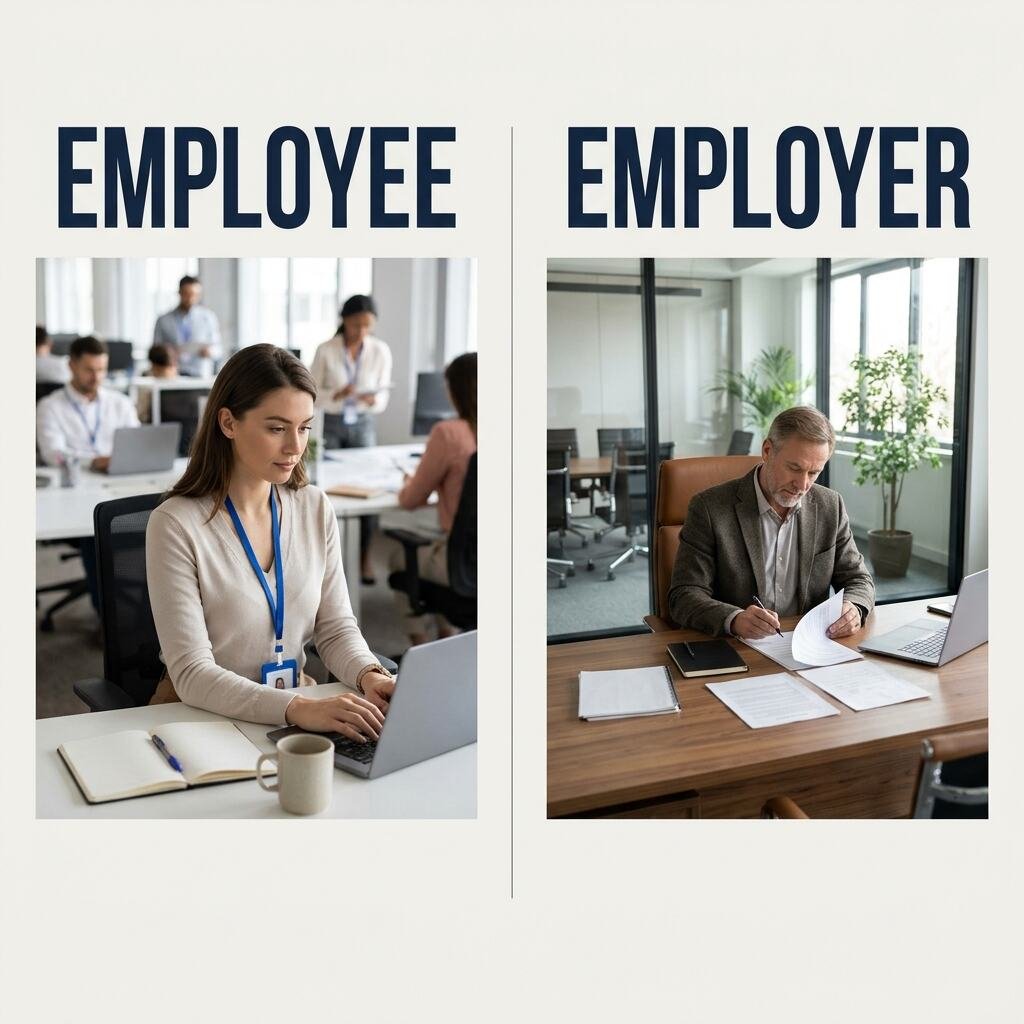
An employee is a person who works for a company. An employer is a person or company that gives someone a job.
Imagine Ali works at a bank. He goes to the office every day and helps customers. He gets a salary at the end of the month. Ali is an employee. The bank is his employer.
These two words are common in daily life. You may see them in job ads, emails, and work papers. But many people mix them up. This is because they look almost the same. Both words are linked to jobs and work. But they have different meanings.
Knowing the difference between employee or employer can help you speak and write better English. It can also help you understand job offers and work rules. In this guide, you will learn their meanings, uses, and differences with simple examples.
Pronunciation
| Word | US Pronunciation | UK Pronunciation |
|---|---|---|
| Employee | /ɪmˈplɔɪ.iː/ | /ɪmˈplɔɪ.iː/ |
| Employer | /ɪmˈplɔɪ.ər/ | /ɪmˈplɔɪ.ə/ |
Learn more about https://personaor.com/damn-or-danm/
Difference Between Employee and Employer
The main difference is simple. An employee works for someone. An employer gives someone a job.
Here are 10 easy differences.
1. Meaning
An employee is a person who works for a company.
An employer is a person or company that hires workers.
Examples:
- Ahmed is an employee at a school.
- The school is his employer.
2. Work
An employee does the work given to them.
An employer gives work to employees.
Examples:
- Sara works in a shop.
- The shop owner gives her work.
3. Salary
An employee gets money for their work.
An employer pays the employee.
Examples:
- Ali gets a salary every month.
- His employer pays him every month.
4. Job Role
An employee does daily tasks.
An employer runs the business and guides workers.
Examples:
- The employee helps customers.
- The employer runs the shop.
5. Hiring
An employee gets hired for a job.
An employer hires people for jobs.
Examples:
- The company hired a new employee.
- The employer hired five workers.
6. Rules
An employee follows the rules of the workplace.
An employer makes rules for the workplace.
Examples:
- The employee comes to work on time.
- The employer sets office rules.
7. Responsibility
An employee must do their work well.
An employer must look after the workplace.
Examples:
- The employee must finish the work.
- The employer must provide a safe office.
8. Benefits
An employee may get extra benefits.
An employer may give these benefits.
Examples:
- The employee gets paid holidays.
- The employer offers health benefits.
9. Authority
An employer usually has more power at work.
An employee usually follows the employer’s orders.
Examples:
- The employer makes important decisions.
- The employee follows the work plan.
10. Position
An employee works for a person or company.
An employer hires people to work for them.
Examples:
- My brother is an employee at a bank.
- The bank is his employer.
Nature and Behaviour of Employee and Employer
Employee
An employee is a person who works for someone else.
An employee may:
- Work in an office.
- Work in a shop.
- Work at a school.
- Get a monthly salary.
- Follow work rules.
- Complete daily tasks.
Example: A teacher who works at a school is an employee.
Employer
An employer is a person or company that gives people jobs.
An employer may:
- Hire new workers.
- Pay monthly salaries.
- Make work rules.
- Give work to employees.
- Manage the business.
- Provide a safe workplace.
Example: A school that hires teachers is an employer.
Why People Get Confused About Employee and Employer
Many people mix up these words because they look alike.
Both words come from the word “employ.” Both are also linked to jobs.
But their meanings are different.
- Employee means a person who works.
- Employer means a person or company that hires.
Remember this simple rule to avoid mistakes.
Comparison Table
| Feature | Employee | Employer |
|---|---|---|
| Meaning | A person who works | A person who hires |
| Main role | Does the work | Gives the work |
| Salary | Gets salary | Pays salary |
| Job | Works for someone | Gives someone a job |
| Hiring | Gets hired | Hires workers |
| Rules | Follows rules | Makes rules |
| Position | Worker | Hiring person or company |
| Benefits | Gets benefits | May give benefits |
| Example | Teacher | School owner |
| Part of speech | Noun | Noun |
Similarity: Both words are related to jobs and workplaces. Both are nouns.
The Origin of Employee and Employer
The words employee and employer come from the French word employer.
This word means “to use” or “to put to work.”
Later, these words became part of the English language.
- Employee means a person who works for someone.
- Employer means a person or company that hires workers.
Today, these words are used in many countries. You can find them in job ads, office papers, and business talks.
British vs American English
There is no spelling difference between these words in British and American English.
Both countries use the same words.
| Feature | American English | British English |
|---|---|---|
| Employee | Employee | Employee |
| Employer | Employer | Employer |
| Spelling | Same | Same |
| Meaning | Same | Same |
| Usage | Common | Common |
American English examples:
- He is an employee at a bank.
- My employer pays me every month.
British English examples:
- She is an employee at a school.
- His employer is very kind.
Both forms of English use these words in the same way.
Which One Should You Use?
Use employee when you talk about a person who works for a company.
Use employer when you talk about a person or company that gives someone a job.
Examples:
- I am an employee at a bank.
- My employer is very helpful.
Both words are correct in the US, UK, and other countries. The right word depends on the meaning of your sentence.
Common Mistakes
Here are some mistakes people often make.
| Wrong Sentence | Correct Sentence |
|---|---|
| I am an employer at this shop. | I am an employee at this shop. |
| My employee pays my salary. | My employer pays my salary. |
| The employer works for the company. | The employee works for the company. |
| The employee hired five workers. | The employer hired five workers. |
| My employee gave me a job. | My employer gave me a job. |
Easy Tip: An employee works. An employer hires.
Everyday Usage Examples
We use these words in many places.
1. In Emails
- Dear Employer, I am looking for a job.
- Dear Employee, please come to the office.
2. On Social Media
- Every employee deserves respect.
- A good employer cares about workers.
3. In News
- The company hired 100 new employees.
- The employer gave workers a pay rise.
4. In Formal Writing
- Every employee must follow office rules.
- The employer must pay workers on time.
5. In Daily Life
- My brother is an employee at a bank.
- My father is a small business employer.
Usage Trends
Employee and employer are common words in English.
People use them when they talk about:
- Jobs
- Offices
- Schools
- Companies
- Salaries
- Job interviews
- Work rules
Employee is often used when talking about workers.
Employer is often used when talking about companies and people who hire workers.
Both words are useful in daily and business English.
Metaphors and Similes
Sometimes, people use these words in a creative way.
Employee
An employee can be called a team player.
This means a person who works well with others.
Example: Ali is a good team player at work.
An employee can also be called a building block of a company.
Example: Every employee helps the company grow.
Employer
An employer can be called a team leader.
This means a person who guides workers.
Example: A good employer is a strong team leader.
An employer can also be compared to a ship captain.
Example: The employer guides the company like a captain guides a ship.
Connotative Meaning
These words usually have a neutral meaning. But they can show good or bad feelings in some sentences.
Employee
Positive meaning: A good and hard-working worker.
Example: She is a loyal employee.
Negative meaning: A worker who does not do their job well.
Example: The employee is always late.
Neutral meaning: A person who works for a company.
Example: He is an employee at a bank.
Employer
Positive meaning: A kind and fair person who hires workers.
Example: He is a good employer.
Negative meaning: A person who treats workers badly.
Example: The employer does not respect workers.
Neutral meaning: A person or company that hires people.
Example: The company is a large employer.
Idioms and Proverbs
There are no common idioms that use employee or employer directly. But some work-related idioms are useful.
1. Work Like a Dog
Meaning: To work very hard.
Example: Ali works like a dog to finish his tasks.
2. Call the Shots
Meaning: To make decisions.
Example: The employer calls the shots in the company.
3. Climb the Ladder
Meaning: To get a better job or position.
Example: Sara wants to climb the career ladder.
4. Get the Ball Rolling
Meaning: To start something.
Example: The employer got the ball rolling on a new project.
Literature and Movies
Books and movies often show the lives of workers and business owners.
Here are some examples.
Literature
1. Hard Times (1854) — Charles Dickens
This book shows the hard lives of factory workers.
2. The Jungle (1906) — Upton Sinclair
This book tells the story of workers in the meat industry.
Movies
1. Modern Times (1936) — United States
This movie shows the lives of factory workers.
2. The Intern (2015) — United States
This movie shows life in an office and the bond between workers and a business owner.
These stories help us learn about work and business life.
Why This Difference Matters
Knowing the difference between employee and employer is important.
These words have different meanings. Using the wrong word can make your sentence unclear.
For example:
- I am an employee. This means I work for a company.
- I am an employer. This means I hire people.
You need these words when:
- Writing a job application.
- Talking about your job.
- Reading a work contract.
- Writing an office email.
- Talking about salary.
- Preparing for a job interview.
Learning these words will help you use English better. It will also help you talk about jobs with confidence.
Usefulness in Daily Life
These words are useful in daily life.
At work: You can talk about your job.
Example: I am an employee at a bank.
In an interview: You can talk about a company.
Example: I want to work for a good employer.
In an office: You can talk about workers and bosses.
Example: The employer hired two new employees.
In daily talks: You can explain who works and who hires.
These simple words can help you in many situations.
Situational Preference
Use employee when you talk about a worker. For example, if you work in a shop, you are an employee. Use employer when you talk about the person who gives you a job. For example, the shop owner is your employer. In job interviews, use employee when you talk about your work. Use employer when you talk about the company that hired you. Both words are correct in British and American English. Choose the word that fits your sentence.
Possible short question
1. What is the difference between employee and employer?
An employee works for a company. An employer hires people to work for them.
2. Is a boss an employee or employer?
A boss can be an employer if they hire workers. A manager can also be an employee of a company.
3. Can a company be an employer?
Yes. A company is an employer when it hires people.
4. Who gets the salary, an employee or an employer?
An employee gets the salary. An employer pays it.
5. Are employee and employer nouns?
Yes. Both words are nouns.
6. Are these words different in British and American English?
No. Both countries use the same spelling and meaning.
7. How can I remember these words?
Remember this easy rule:
- Employee = Works for someone.
- Employer = Hires someone.
Conclusion
Employee and employer are two common English words. Both are linked to jobs and workplaces, but they have different meanings.An employee is a person who works for a company or another person. An employer is a person or company that hires workers and pays them.For example, if you work at a school, you are an employee. The school is your employer.Both words are used in British and American English. Their spelling and meaning stay the same.You may see these words in job ads, emails, work papers, and daily talks. Knowing their meanings can help you speak and write better English.Always remember one simple rule: an employee works, while an employer hires. This small tip will help you choose the right word. It will also help you avoid mistakes in your writing and conversations.

I’m Daim Abbas, an English language enthusiast, content writer, and SEO writer. I create clear and practical content about word meanings, synonyms, vocabulary, and commonly confused English words. I’m passionate about making English easy to understand while creating helpful, reader-friendly, and SEO-optimized content.